Sapel Blog
How to Melt Plastic into Liquid: Heat Melting and Chemical Dissolving Methods
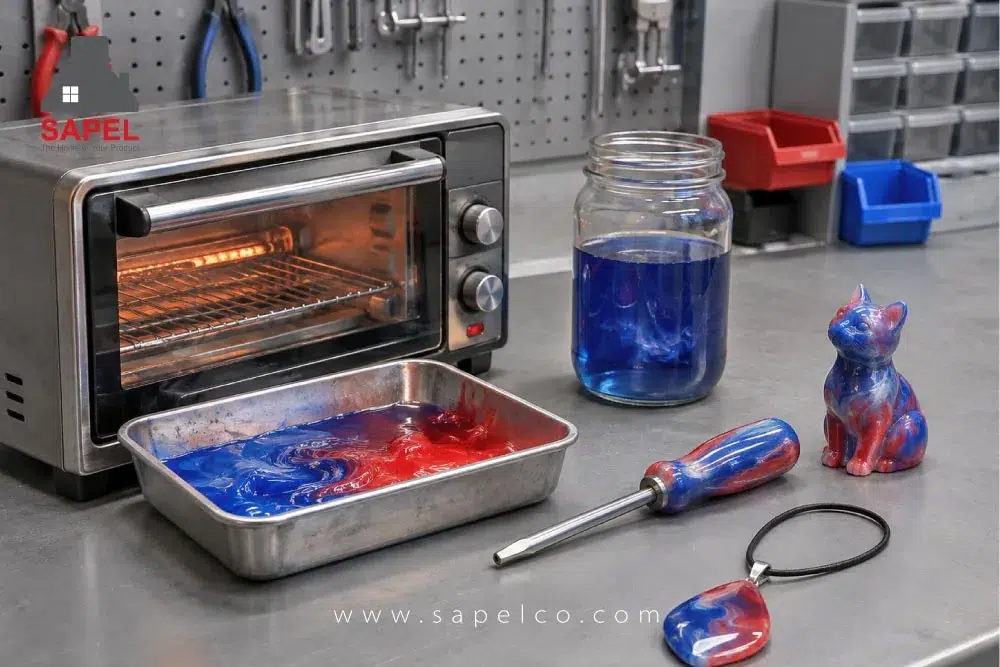
If you want to know how to melt plastic into a liquid, there are two main ways: heat melting with controlled heat (for example in a toaster oven from about 120 °C upwards) and chemical dissolving with solvents such as acetone. Both methods only work with thermoplastics; thermosets burn instead of turning liquid and give off toxic smoke. In this guide we explain both methods step by step, together with the safety warnings.
How to Melt Plastic into Liquid
Turning used containers and plastic scrap into liquid is an interesting, practical way to reuse plastic at home and make creative pieces. Liquefied plastic can be used to make jewelry, tool handles, decorative figurines and functional parts. To do it well, you need to understand how different plastics behave chemically and choose the right method (heat or chemical). Below we first look at how plastics are structured and then describe the two main methods. For the bigger picture of how plastic scrap is collected, sorted and recycled, see our guide to plastic waste management.
Types of Plastic and How They React to Heat and Solvents
Not all plastics react the same way to heat or chemical solvents. Before you start, you need to know which of the two main groups below your material belongs to.
Thermoplastics
Thermoplastics have long polymer chains that gain energy when they are heated or exposed to certain solvents, and then slide past one another easily. This is what makes the material soft and fluid. Common thermoplastics include:
- Polyethylene: in plastic bags and bottles;
- Polylactic acid (PLA): a biodegradable plastic;
- Polypropylene: in packaging containers and harder plastics;
- ABS: a tough plastic used in toys and construction bricks; read more in our article on ABS plastic.
These plastics can be melted or dissolved again and again, and they turn solid once more when they cool or the solvent evaporates.
Thermosets
Thermosets, by contrast, form strong cross-links between their polymer chains when they are first made. That is why heat does not melt them: they burn, break down and give off toxic smoke. Well-known thermosets include:
- Epoxy resins
- Bakelite
- Polyester resin
- Cross-linked polyethylene (PEX)
General Methods for Liquefying Plastic
There are two main ways to turn thermoplastics into a liquid:
- Heat melting: using the controlled heat of an oven to change the plastic from solid to liquid.
- Chemical dissolving: using organic solvents (such as acetone or xylene) to break down the structure of the plastic.

Method 1: Melting Plastic Bottles and Containers with Heat
Heat melting is a simple, low-cost way to turn plastic bottles into a melt you can pour into a mold. Bottles made of high-density polyethylene (HDPE), such as a 1-liter plastic bottle of detergent, soften at a relatively low temperature and are a good place to start.
Step 1: Prepare the plastic
- Clean: remove all paper and plastic labels from the bottles. Wash and dry the bottles thoroughly so that no sticky residue is left on them.
- Cut up: cut the bottles into small pieces with scissors. Small pieces melt more evenly.
- Fill the tray: put the pieces in a heat-resistant metal tray and do not overfill it, so the melt does not spill inside the oven.
Step 2: Melt in a toaster oven
- Set up: always place the toaster oven (a small electric oven) outdoors and set it to about 120 °C. Never use an oven you cook food in.
- Heat gradually: put the metal tray in the oven for 3 to 4 minutes, then raise the temperature in steps of about 15 °C until the plastic has fully melted and flows. Different plastics melt at different temperatures.
- Remove: once the plastic has fully melted, take the tray out carefully wearing thick oven gloves.
Step 3: Mold and shape
- Pour into the mold: guide the melt into the mold with a wooden stick.
- Cool: let the plastic cool and harden completely at room temperature, then take it out of the mold.
- Make a mold: you can make your own mold by pressing pottery clay around the two halves of an object, leaving a hole at the top for pouring the melt, and baking it until it is hard. Ready-made metal or aluminum molds are also a good option.
- Add color: mixing pieces of different colors creates attractive effects; for example, pour red and green melt into small metal cups to make colorful decorations.

Method 2: Liquefying Plastic Chemically, Without Heat
This method needs no kiln or oven: the plastic dissolves in a suitable solvent and turns into a flowing liquid.
Dissolving ABS plastic with acetone
ABS, the plastic found in construction toys such as LEGO bricks, dissolves easily in acetone. The same solvent action is how plastic cement fuses parts together, which we explain in our guide to plastic glue.
- Break up: break ABS pieces in the color you want into small bits.
- Add the solvent: put the pieces in a glass jar and add 100% acetone.
- Wait: close the lid of the jar tightly. After 3 to 4 hours the plastic dissolves completely in the acetone and turns into a thick liquid.
- Inject and mold: draw the liquid into a syringe and inject it into a mold to make parts such as a tool handle.
- Finish: once the part has fully hardened, sand it and wipe the surface with a cotton pad dampened with acetone to give it a smooth, glossy finish.
Dissolving polypropylene and polyethylene with xylene
Acetone has no effect on tougher plastics such as polypropylene and polyethylene (bags and packaging containers). These plastics dissolve only in hot xylene and barely dissolve at room temperature. Because hot xylene is highly flammable and its vapors are toxic, this method belongs in a laboratory or a properly equipped industrial setting and is not recommended at home.

Equipment and Essential Safety Warnings
Working with molten plastic and chemical solvents calls for strict safety precautions.
Equipment table
| Method | Equipment and materials | Suitable container |
|---|---|---|
| Heat melting | Plastic bottles, scissors, toaster oven, wooden stick, aluminum or clay mold | Heat-resistant metal tray |
| Chemical dissolving | ABS pieces, 100% acetone, syringe, sandpaper | Glass jar with a lid |
Critical safety warnings
- Ventilation and open air: melting plastic releases toxic smoke and fumes. Always do it outdoors and keep your distance from the oven while the plastic melts.
- Plastics you must not melt: never melt PVC (recycling code 3) or polystyrene (code 6); melting PVC releases toxic hydrogen chloride gas and other hazardous compounds. Our guide to plastic recycling symbols shows how to read these codes.
- Skin protection: molten plastic causes severe burns if it touches your skin. Wear protective gloves and long sleeves when handling the tray.
- Solvent safety: acetone and xylene are volatile and flammable; keep them in a tightly closed glass container, away from flames and heat sources. For more detailed safety information, see the acetone safety data on PubChem.
Conclusion and Practical Uses
Liquefying plastic is an inventive way to reduce waste and turn throwaway materials into useful products. Once you have mastered heat melting for bottles and chemical dissolving with acetone for ABS, you can make decorative pieces, custom handles and practical objects. Following the safety warnings, keeping the area well ventilated and using protective equipment are what make recycling plastic at home a successful and safe experience.
Frequently Asked Questions About Melting Plastic
At what temperature does plastic melt?
It depends on the type of plastic. Low-density polyethylene melts from about 110 °C, high-density polyethylene at about 130 °C, polypropylene at about 160 °C and PET at about 250 °C.
Does acetone dissolve all plastics?
No. Acetone dissolves plastics such as ABS and polystyrene, but has almost no effect on polyethylene and polypropylene.
Can you melt plastic in a home oven?
It is not recommended. The fumes from molten plastic are toxic and settle on the oven walls; it is better to use a separate toaster oven outdoors.
Which plastics should not be melted?
Thermosets such as Bakelite and epoxy do not melt; they burn. PVC and polystyrene also release toxic gases when heated and should not be melted.