Sapel Blog
What Is Plastic Glue? Types, How to Glue Plastic and Choosing the Best Glue
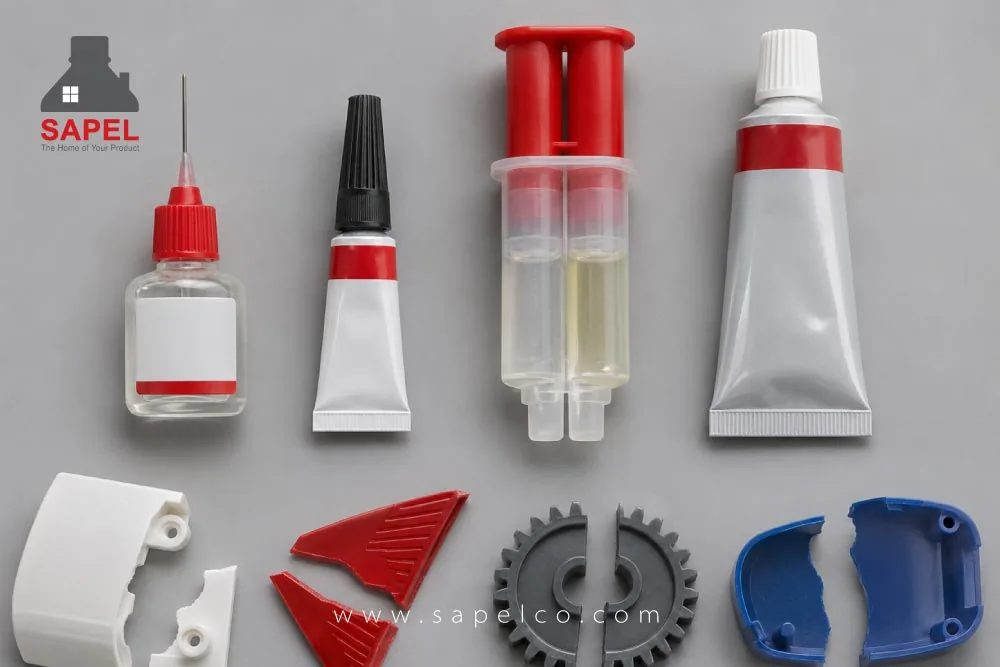
Plastic glue is an adhesive formulated to join plastic parts. Depending on the type of plastic, it either softens the surface of the parts for a moment and fuses them together (plastic cement), or forms a strong adhesive layer between them (cyanoacrylate, epoxy and polyurethane). To choose the best glue for plastic you first need to know which plastic you have, because plastics such as polyethylene and polypropylene barely bond with ordinary glues.
What Is Plastic Glue?
Joining plastic parts is one of the trickiest steps in home repairs, workshop projects and building scale models and miniature figures. Unlike wood or paper, which are highly porous, plastics have non-porous surfaces and very different molecular structures. That is why general-purpose adhesives such as wood glue or plain white glue usually fail on plastic. Choosing the right glue means understanding the nature of the plastic, the chemistry involved and the rules of surface preparation.
In this guide we look at how chemical welding works, the types of plastic glue on the market, how to identify plastics, and a step-by-step method for bonding them.
How Plastic Glue Works: Chemical Welding vs Surface Bonding
Plastic glues work in two completely different ways depending on the material. Common adhesives create surface adhesion, but a special group of glues known as plastic cement works by chemical welding.
In chemical welding, the glue contains active organic solvents (such as acetone and other industrial solvents) together with dissolved plastic polymers. When the glue is applied, the solvents briefly soften and melt the surface layer of the part. When the two parts are pressed together, the polymer chains of both surfaces tangle with each other, and once the solvent has fully evaporated the plastic sets solid again. The result is a single, continuous bond that in most cases is as strong as the base material or even stronger. In industry this method is known as solvent welding of plastics.
Key point: plastic cement does not just stick parts together; it melts them into each other. Using too much can melt the part too far and destroy its fine details.

Types of Plastic Glue and Their Uses
Plastic glues fall into four main groups based on their chemistry, setting time and flexibility:
1. Plastic cement
These glues are formulated specifically for thermoplastics such as polystyrene (PS), ABS and butyrate. Because it is precise and leaves no thick layer once dry, plastic cement is the favourite of scale modellers and miniature-figure builders. Specialist brands such as Testors, Plastruct and Citadel use low-odour formulas with very fine needle nozzles so the details of the parts are not damaged.
2. Cyanoacrylate glues (super glue)
Instant or cyanoacrylate glues are designed to join small, hard parts in a few seconds and work very well on a wide range of plastics such as acrylic and polystyrene. Newer gel formulas (such as Gorilla Super Glue Gel) contain microscopic rubber particles, which make them more resistant to impact and vibration, and their nozzles clog less. For hard-to-bond plastics, two-step systems with a primer or activator (such as the Loctite Plastics Bonding System) are used.
3. Plastic epoxy glues
Epoxies are two-part structural adhesives made of a resin and a hardener. Products such as J-B Weld and Loctite plastic epoxy resist thermal cycling, chemicals, UV light and water very well. What sets epoxy apart is its ability to fill gaps in uneven parts or rough breaks, which makes it ideal for heavily loaded industrial parts and automotive parts.
4. Polyurethane and flexible glues
Soft, flexible plastics such as vinyl covers, faux leather and rubber parts need a glue that bends with the part once it has dried. Polyurethane glues and flexible repair adhesives create a waterproof, clear and flexible bond that does not yellow or turn brittle under vibration, bending or sunlight.
Identifying the Plastic: the Key to a Good Bond
Knowing exactly which material you are gluing prevents layers from peeling and bonds from failing. Most plastic parts carry a moulded recycling code that makes choosing a glue easier; see our guide to plastic recycling symbols for what each number means.
Group 6 plastics, marked PS (polystyrene), are used in disposable containers, models and toys and bond easily with plastic cement and epoxy. Construction and industrial plastics such as ABS and PVC also respond very well to epoxy and plastic cement.
The challenge of low-energy plastics (PE and PP)
Hard, dense plastics such as polyethylene (PE) and polypropylene (PP), used in buckets, toolboxes, car parts and industrial packaging, have very low surface energy. Ordinary glues slide off them and do not form a lasting bond. That is why a crack in a 20-liter jerrycan made of high-density polyethylene (HDPE) cannot be repaired with ordinary glue, and if the container is meant to hold liquids or chemicals, replacing it is safer than gluing it. The same applies to HDPE plastic bottles. To glue these plastics you should:
- use a two-part cyanoacrylate system with an activator;
- always sand the surface before applying the glue to give it a mechanical key.

How to Glue Plastic: Step-by-Step Technique
To get the strongest and longest-lasting bond, follow these steps:
- Clean the surface thoroughly: wash the plastic with soap and water or wipe it with isopropyl alcohol to remove grease, dust and fingerprints. Once it is dry, do not touch the surface with bare hands.
- Roughen the surface: lightly roughen the joint with fine sandpaper (120 to 200 grit) or a soft scouring pad to increase the area the glue can grip.
- Apply the glue precisely: use a needle applicator or a brush for plastic cement and apply only a little; too much glue melts the plastic uncontrollably.
- Mix correctly (two-part glues): if you are using epoxy, mix the resin and hardener thoroughly in the ratio the manufacturer specifies (usually 1:1) on a disposable surface.
- Clamp and hold: hold the parts firmly together with clamps, tape or rubber bands. Curing time ranges from a few minutes to 24 hours depending on the glue.
- Remove excess glue: wipe off any excess glue immediately, before it dries, with isopropyl alcohol.

Safety Tips and Storage
The solvents in plastic glues and chemical cements contain volatile organic compounds. Follow these rules to protect your health:
- Good ventilation: always work with fresh air flowing, or use local extraction and a respirator mask.
- Protective equipment: wear rubber gloves and safety glasses to keep solvents off your skin and out of your eyes.
- Keep away from fire: plastic cements and solvent-based glues are highly flammable; keep them away from flames, heaters and sources of sparks.
- Storage: clean the nozzle after use, close the cap tightly and store the glue in a dry, cool place below 24 °C (75 °F).
Plastic Glue Comparison Table
Use the table below to quickly choose the right glue by plastic type and working properties:
| Glue type | Compatible plastics | Setting / curing time | Key properties | Best uses |
|---|---|---|---|---|
| Plastic cement | PS (polystyrene), ABS, butyrate | Sets in minutes / full cure in 24 hours | Continuous chemical weld, keeps fine details | Scale models, miniatures and model kits |
| Super glue (cyanoacrylate) | Acrylic, PS and most hard plastics | Sets in 10 to 30 seconds | Dries clear, very fast, moisture-resistant | Quick home repairs and small parts |
| Two-step system (with activator) | PE (polyethylene), PP (polypropylene) | Sets in seconds | Bonds low-energy plastics, waterproof | Hard household containers, buckets and industrial parts |
| Plastic epoxy (two-part) | ABS, PVC, nylon, polycarbonate | Sets in 5 minutes / full cure in 24 hours | Gap-filling, resists impact, UV and chemicals | Car parts, rough breaks and heavy loads |
| Polyurethane / flexible glue | Vinyl, soft plastics, fabric and leather | Variable setting / full cure in 24 hours | Flexible, waterproof, does not yellow under UV | Covers, shoes, soft toys and inflatables |
Conclusion
Choosing the right glue for plastic is a balance between the type of plastic, the load on the part and the environment it will be used in. By identifying the plastic correctly, cleaning and sanding the surface and applying the glue in a controlled way, you can create a durable bond that is as strong as the original part.
Frequently Asked Questions About Plastic Glue
What is the best glue for plastic to plastic?
It depends on the plastic: plastic cement for PS and ABS, super glue for quick repairs of hard parts, two-part epoxy for rough breaks and loaded parts, and polyurethane glue for soft plastics.
Why does glue not stick to polyethylene and polypropylene?
Because these two plastics have very low surface energy, so glue does not spread over them or grip. To bond them, sand the surface and use a two-part cyanoacrylate with an activator.
How long does plastic glue take to dry?
Super glue sets in 10 to 30 seconds and epoxy usually in about 5 minutes, while most plastic glues need about 24 hours to reach full strength.
Is plastic glue dangerous?
Solvent-based glues give off flammable volatile organic vapours, so use them outdoors or with good ventilation, wear gloves and safety glasses, and keep them away from fire.