
Sapel Blog
Agricultural Pesticide Packaging Standards

Did you know that just a few drops of a concentrated agricultural pesticide leaking out can contaminate thousands of liters of groundwater? When it comes to hazardous chemicals, the pesticide packaging standard is not just a recommendation; it is the front line in protecting human life and the environment. Following the principles of pesticide packaging and knowing the rules for packaging fertilizers and pesticides is mandatory for every manufacturer and farmer. In this comprehensive article we take a close look at the standards for agricultural pesticide containers, to understand what makes a container safe.
Why Do Standards Matter in Pesticide Packaging?
You may ask how agricultural pesticides should be packaged according to the standards, and why it matters so much. The main reason is that pesticides contain active chemical compounds that can react when exposed to sunlight, moisture or oxygen and produce toxic gases. Following these standards matters for two reasons:
1. Preserving chemical stability: preventing the active ingredients of the pesticide from breaking down.
2. Protecting human health and nature: preventing pesticide leaks during transport and storage.
Approved Materials for Agricultural Pesticide Containers
Choosing the right material is the beating heart of safe packaging. Depending on the chemical resistance required of the packaging, there are several materials on the market, including glass, metal, PET and polyethylene. But what is the best plastic for packaging chemical pesticides?
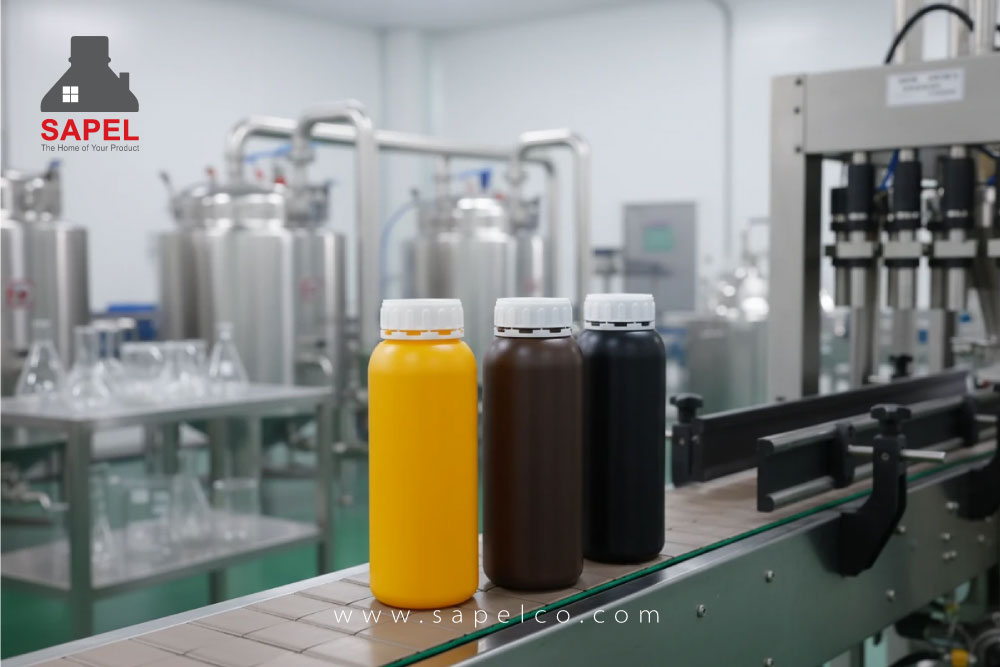
Without doubt, high-density polyethylene (HDPE) is the best option, thanks to its remarkable resistance to acid and alkali corrosion. As a pesticide container manufacturer with years of experience, Sapel produces containers with the highest safety factor. If you are looking for containers that will stand up to the harshest environmental and chemical conditions, we recommend exploring Sapel’s range to buy polyethylene pesticide bottles and rest assured of their quality and compliance with standards.
Labeling Rules for Agricultural Pesticides (Plant Protection Organization Requirements)
A high-quality container without the right information is like a ticking time bomb! What are the labeling requirements for agricultural pesticide containers? Under the rules of Iran’s Plant Protection Organization for packaging and selling pesticides, every container must have a legible, waterproof, chemical-resistant label.
According to the Plant Protection Organization’s website, pesticide labels must include information such as the brand name, active ingredient, production and expiry dates, and instructions on what to do in case of poisoning.
What the Color Bands and Warning Symbols Mean
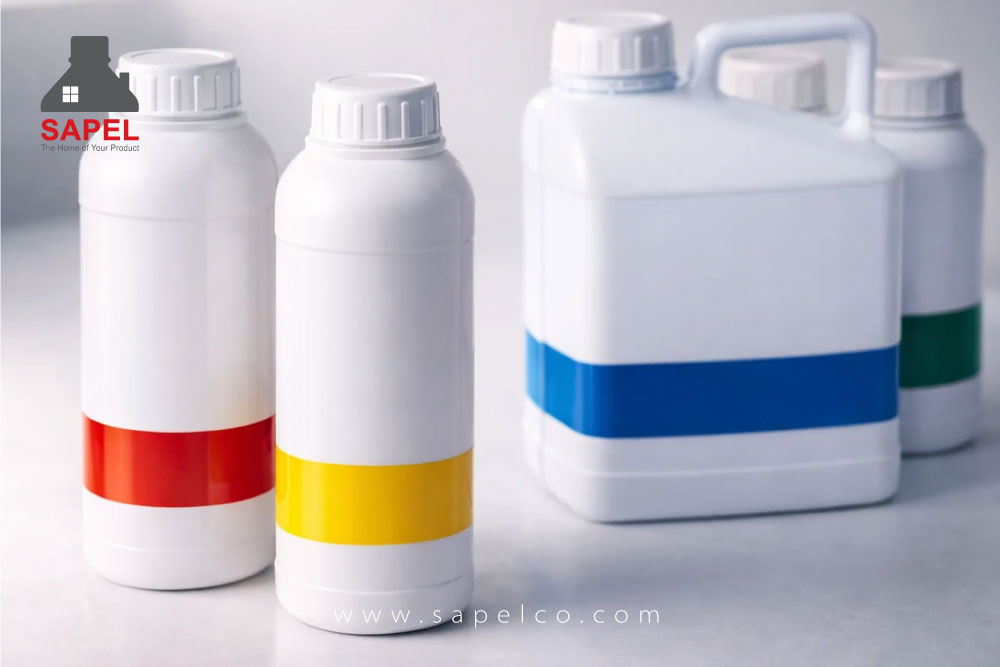
One of the most interesting parts of packaging is its visual language. So what do the colors on agricultural pesticide packaging mean? The color codes on pesticide packaging (the hazard color band) are printed at the bottom of the label so that farmers can see the level of hazard at a glance:
Red band: extremely hazardous (very high toxicity)
Yellow band: hazardous (medium-to-high toxicity)
Blue band: caution (moderate toxicity)
Green band: low hazard (low toxicity)
Warning symbols on pesticide containers (pictograms), such as a skull, a dead fish (danger to aquatic life) or gloves, also show users exactly what safety equipment they need when using the product.
International Standards (Such as FAO) in Pesticide Packaging
Globally, the international FAO standards for pesticides set the benchmark. The Food and Agriculture Organization of the United Nations places particular emphasis on the safe sealing and closure of pesticide containers. Under these standards, containers must have tamper-evident caps to prevent any tampering or leaks. Containers must also be designed so that, once emptied, as little pesticide as possible is left in their corners.
How to Recycle and Dispose of Empty Pesticide Containers
One of the biggest environmental problems is empty containers being dumped in nature. The safe way to dispose of empty agricultural pesticide containers involves an internationally used technique called “triple rinsing”. The farmer rinses the empty container three times with water and pours the rinse water back into the sprayer. The plastic container must then be punctured so it cannot be reused (for example, to store drinking water), and finally handed in to an authorized recycling center.
Conclusion and Frequently Asked Questions (FAQ)
Pesticide packaging is no joke. From choosing the right material from reputable companies such as Sapel to following color codes and using safe seals, everything forms a connected chain that protects our health and the planet. Given how important this is, the price of a pesticide container should not be the only deciding factor; quality and compliance with standards must come first.
Frequently Asked Questions:
1. What is the best material for packaging agricultural pesticides?
2. What does the yellow band on a pesticide container mean?
3. Can pesticide containers be recycled?