

Sapel Blog
Does Freezing Plastic Water Bottles Really Cause Cancer?
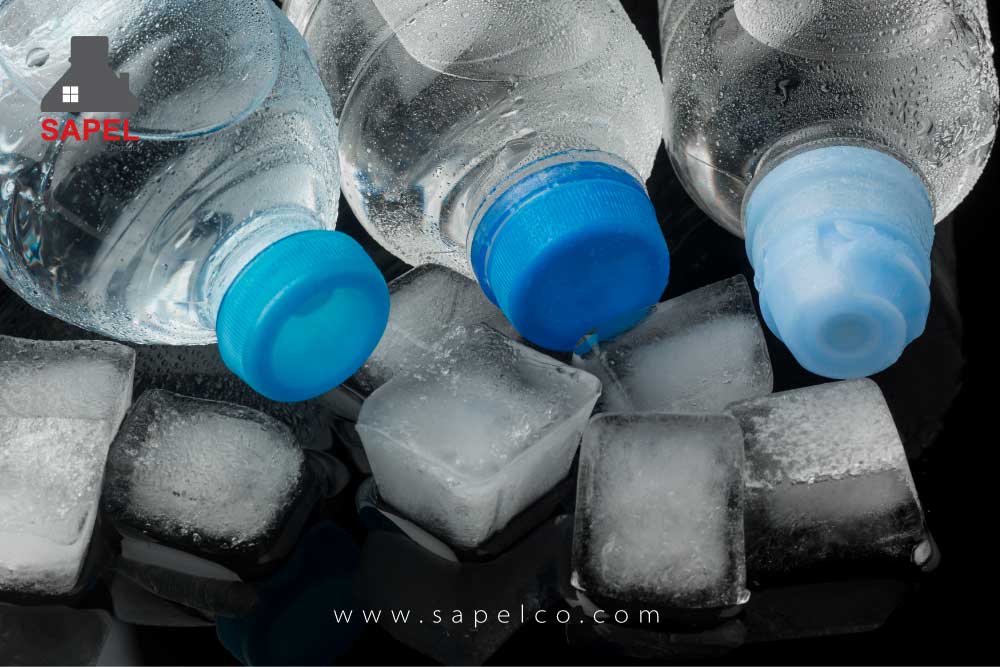
Let’s put your mind at rest right away: no, freezing plastic water bottles does not increase your risk of cancer in any way. Leading scientific authorities around the world, including the Canadian Cancer Society and the U.S. Food and Drug Administration (FDA), have clearly confirmed that drinking water from frozen plastic bottles is completely safe. A reputable university study in Iran has also confirmed that freezing water in bottles has no significant effect on the release of microplastic particles into the water.
But is freezing plastic really completely harmless? If cancer is not the real threat, what other hidden health risk is lurking in your reusable bottles that you should worry about?
Tracing the Rumor: Where Did This Fear Begin?
In 2002, a Dr. Edward Fujimoto appeared on a local TV program in Honolulu, Hawaii, and claimed that freezing water in plastic bottles could release dangerous toxins into the water. The claim had no basis in research or science. An employee of the American Cancer Society who believed Dr. Fujimoto’s claims were credible shared them in good faith, but without any scientific review, through the organization’s communication channels. Although the society and other authorities quickly denied it, the rumor could no longer be contained.
Shortly after these messages spread, both of the major organizations involved, Johns Hopkins Hospital and the American Cancer Society, officially denied any connection with the emails and stated that the claims were entirely fabricated and false. Experts in the field were quick to explain that disposable water bottles simply do not contain any substance called dioxin that could be released by cold or by changes in temperature. Even so, as is so often the case in the media, the rumor was far louder than the scientific denials, and the fear has stayed in many people’s minds to this day.
If It’s Not Cancer, What Is the Real Risk?
Now it’s time for a surprising truth. If science has shown that freezing plastic bottles does not release carcinogenic toxins, why do doctors and health authorities still warn us against reusing these bottles repeatedly or improperly? Because the real enemy of your health is not chemicals or the plastic itself, but a hidden army of bacteria and fungi.
When you keep a single-use water bottle to use again, its narrow neck and particular shape make it hard to clean thoroughly. If these bottles are not properly washed and dried after use, or are left for a while in warm places (such as inside a car or outdoors), they become an ideal breeding ground for microbes. In fact, warmth and the moisture left inside the bottle greatly speed up the growth of harmful bacteria and fungi.
Food Poisoning from a Frozen Water Bottle
It is heavy microbial build-up and contamination (not the physical structure of the plastic) that can cause you trouble. Drinking water from bottles that have become contaminated with microbes can lead to gastrointestinal illness, nausea, vomiting and severe diarrhea. Interestingly, this risk is by no means limited to single-use plastic bottles: any other container or water bottle (even metal or glass) that is not washed properly will face exactly the same bacterial build-up and digestive risks. To prevent this health hazard, experts recommend that before refilling any bottle or disposable container, you always wash it thoroughly with warm water and soap (dishwashing liquid) to stop any bacteria or fungi from growing and multiplying. Drying the bottle completely after washing is another key step, because it removes the moisture microbes need to survive.