
Sapel Blog
Why Do Plastic Jerrycans Bulge or Collapse? Causes and a Proven Fix
Swelling and Shrinking in Plastic Jerrycans and Bottles
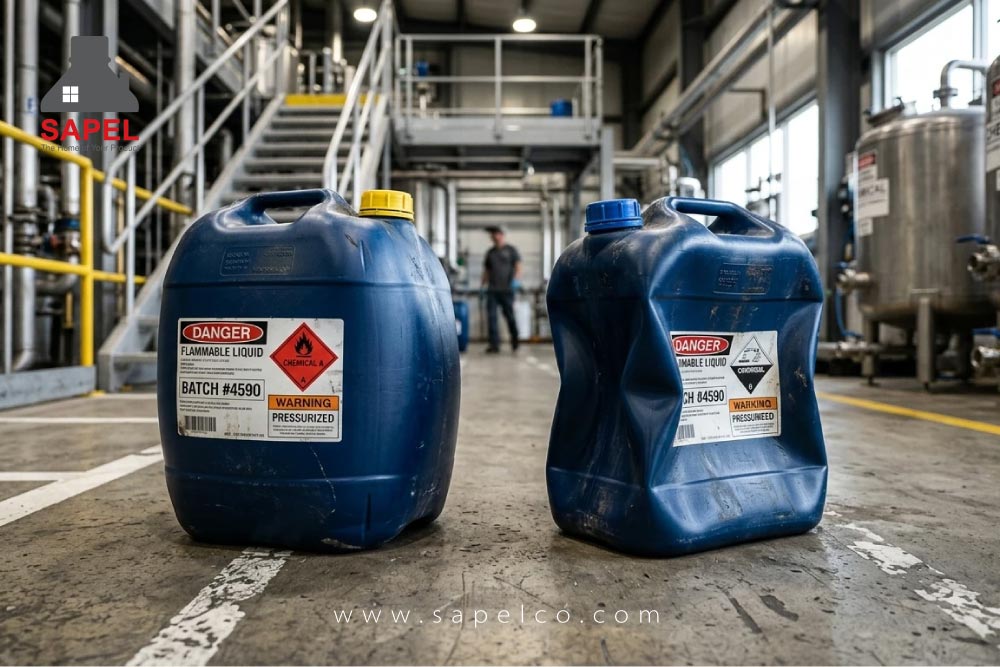
One of the big challenges in packaging chemical, pharmaceutical and agricultural products is containers changing shape after filling. You have probably seen the unpleasant sight of plastic containers swelling or shrinking: a jerrycan either bulging so much that it is about to burst, or caving inwards and looking bad.
In this Sapel magazine article we take an expert look at why plastic jerrycans bulge and why plastic bottles collapse, and, drawing on years of working with leading manufacturers, offer proven solutions to prevent these problems.

Why Do Plastic Jerrycans Bulge? (Causes of Swelling)
Deformation of a plastic jerrycan in the form of bulging usually happens in industries that deal with active substances. When products such as agricultural fertilizers, pesticides, bleaches or chemical and pharmaceutical compounds are packaged in a jerrycan, they may release gas over time.
- Gas released by chemicals: chemical reactions inside the jerrycan produce gas. If the gas has no way out, the pressure inside the container rises and the jerrycan bulges.
- Temperature changes: temperature swings (heat) in storage can make the liquid and gas inside expand and put extra pressure on the walls of the high-density polyethylene (HDPE) jerrycan.
What Is Paneling, or the Collapse of a Plastic Bottle?
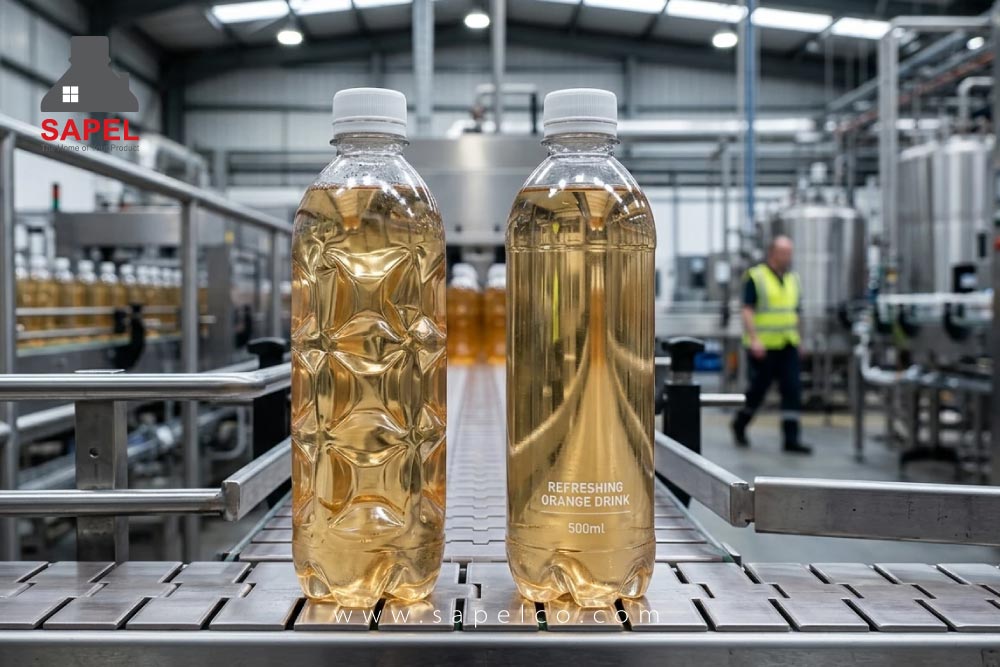
Sometimes the problem is the other way round: instead of swelling, the container caves in. In the packaging industry this is called paneling. Its main causes are:
- Lower internal pressure: if the packaged product absorbs the oxygen in the headspace at the top of the container, the pressure inside drops below the atmospheric pressure outside and the container is pulled inwards (it wrinkles).
- Hot-filled products cooling down: if liquids are filled into the jerrycan hot and the cap is sealed, the volume of the liquid and air inside shrinks as they cool, and the plastic bottle caves in.
Sapel’s Specialist Solutions to Prevent Container Deformation
Having worked on many projects in the agricultural, pharmaceutical and chemical industries, Sapel’s specialists have developed engineered solutions to this problem:
1. Using a Vented Jerrycan Cap
The best and most effective way to stop jerrycans of agricultural fertilizer and pesticides from bulging is to use a vented cap. The vented caps made by Sapel have specialist membranes and liners (such as foam liners with an induction seal) with a two-way design. They let gases produced inside the container escape easily so the internal pressure stays balanced, but they never let liquid leak out (they are completely liquid-tight).
2. A Stronger Body and the Right Polymer Blend
Sometimes the chemical resistance of a plastic container, or the wall thickness of the jerrycan, is not enough for the product. At Sapel, after looking at your product, we recommend solutions such as increasing the weight of the container (to make the walls stronger) and using a polymer blend that is fully matched to your chemical or pharmaceutical product. To see and buy Sapel’s plastic containers, made to these strict standards, visit our shop.
Advanced Quality and Laboratory Testing
For a plastic jerrycan to withstand internal and external pressure, temperature swings and transport, it has to pass through tough quality filters.
The laboratory at Sapel’s plant is equipped with the most advanced instruments for container quality control. To make sure our products don’t deform and stand up to use, we run a range of plastic container quality control tests; those related to swelling and shrinking, which are carried out continuously, are:
- Gas pressure test: to check the container’s resistance to the gases released.
- Road test and drop test: to simulate harsh transport conditions.
- ESCR (environmental stress crack resistance): to check the product’s resistance in corrosive chemical environments.
- Other tests such as BCT, MFI, oven testing and torque testing (with a machine torque tester) to make sure caps open and close properly.
Conclusion
Swelling and shrinking not only ruin your product’s appearance on store shelves but also bring safety risks and leaks. By choosing engineered packaging and solutions such as Sapel’s vented caps and reinforced containers, you can make sure your product stays safe from storage right through to the end user.
For expert advice on choosing the best container and cap for your product, contact Sapel’s sales team.