

Sapel Blog
Food-Grade vs. Industrial Plastic Jerrycans: A Difference at the Molecular Level
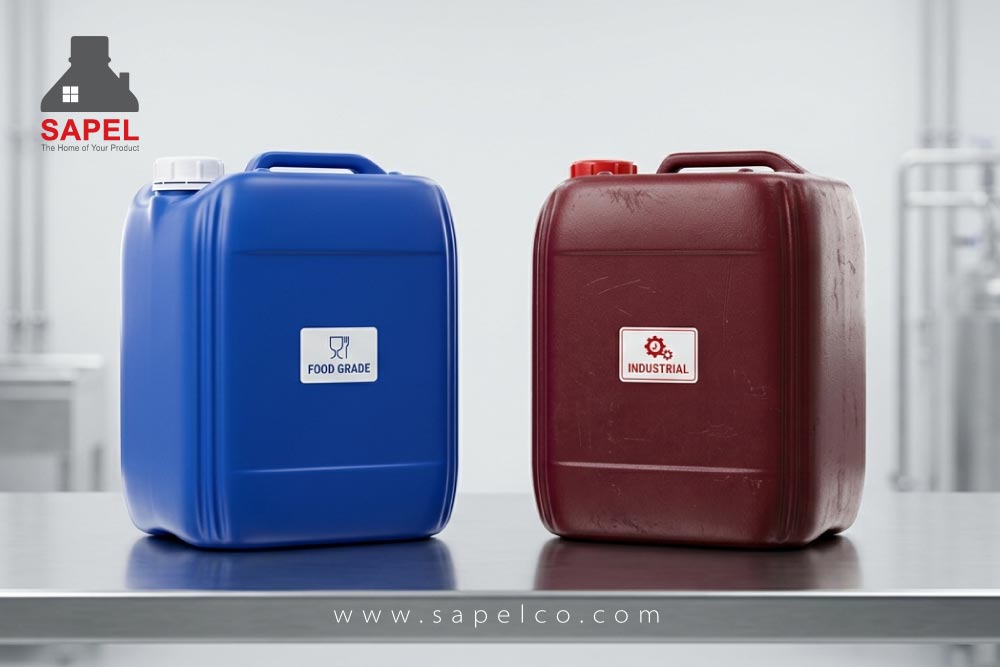
On the outside, a 20-liter plastic jerrycan used for cooking oil may look just like one used for detergents or motor oil, but at the molecular level the difference between them can decide whether a product is healthy or toxic!
Many food, pharmaceutical and cosmetics manufacturers are looking for safe packaging containers, but what exactly makes a jerrycan “food grade”? In this article we take a fresh, scientific look at the difference between the two types of jerrycan, so you can make a smarter decision when buying plastic jerrycans.
1. The Phenomenon of “Chemical Migration”
The most interesting and important difference between the two jerrycans is how they behave when it comes to a phenomenon called “migration”. At a microscopic level, plastics are porous. When a substance (such as food acids, oil or a medicinal syrup) is put into a jerrycan, molecules from the plastic tend to pass into the product.
- In food-grade jerrycans: pure plastics (such as food-grade polyethylene and polypropylene) are used, whose overall migration limit (OML) is close to zero, so they pass no harmful substances into food or medicine.
- In industrial jerrycans: because of additives, plasticizers and recycled plastic, hazardous chemicals easily leach into the product, changing its taste and smell and even making it toxic.
2. Pigments and Masterbatch Additives
The color of a jerrycan isn’t just for looks! In industrial jerrycans, masterbatches and pigments that may contain heavy metals (such as lead or cadmium) are used to cut costs.
In food-grade jerrycans, however, industrial pigments are banned. The masterbatches used in food-safe containers must be approved for food contact (FCM), so that they don’t react when exposed to heat or acids in food.
3. Recycling Codes and Physical Markings
How does a professional buyer recognize a food-grade jerrycan? Food-safe jerrycans usually carry internationally recognized markings:
- The glass and fork symbol: this international symbol shows that the container is safe for direct contact with food.
- Safe plastic codes: food-grade jerrycans are usually made of high-density polyethylene (HDPE, recycling code 2) or polypropylene (PP, recycling code 5). These two materials have the most stable structure for sensitive products.
4. 100% Purity vs. Regrind (Recycled Material)
In the plastic container industry, it is very common to use “regrind”, or recycled material, to make industrial jerrycans and lower their cost. This material has previously been used for unknown purposes (such as storing pesticides or chemicals), and reheating it creates new toxic compounds.
A standard food-grade jerrycan must be made from 100% virgin petrochemical material, on a completely isolated production line to prevent “cross-contamination”.

How Reputable Brands Do It (Example: Sapel)
Professional manufacturers set strict standards to earn the trust of sensitive industries (pharmaceutical and food). On Sapel‘s production lines, for example, the following standards are applied as unbreakable rules:
- No recycled material at all: to avoid any risk of contamination, no regrind ever goes into the production lines.
- Specialist materials: only the best grades of petrochemical polyethylene and polypropylene are used.
- Health manufacturing license: all of Sapel’s food-grade jerrycans hold a health manufacturing license and recognized certificates from the Ministry of Health (Food and Drug Administration), which is the main proof that a container is food grade during regulatory inspections.
Frequently Asked Questions
Does washing an industrial jerrycan with boiling water make it safe for food?
Why are Sapel's food-grade jerrycans also recommended for the pharmaceutical industry?
Does using a food-grade jerrycan affect exports?
Advice and Inquiries:
For technical advice on choosing the right jerrycan for your particular product (based on its acidity or sensitivity to light), and to receive the health documentation for Sapel’s jerrycans, contact our specialists.