

Sapel Blog
50 Years of Change in Iran’s Plastics Industry: A Look at Sapel’s Experience
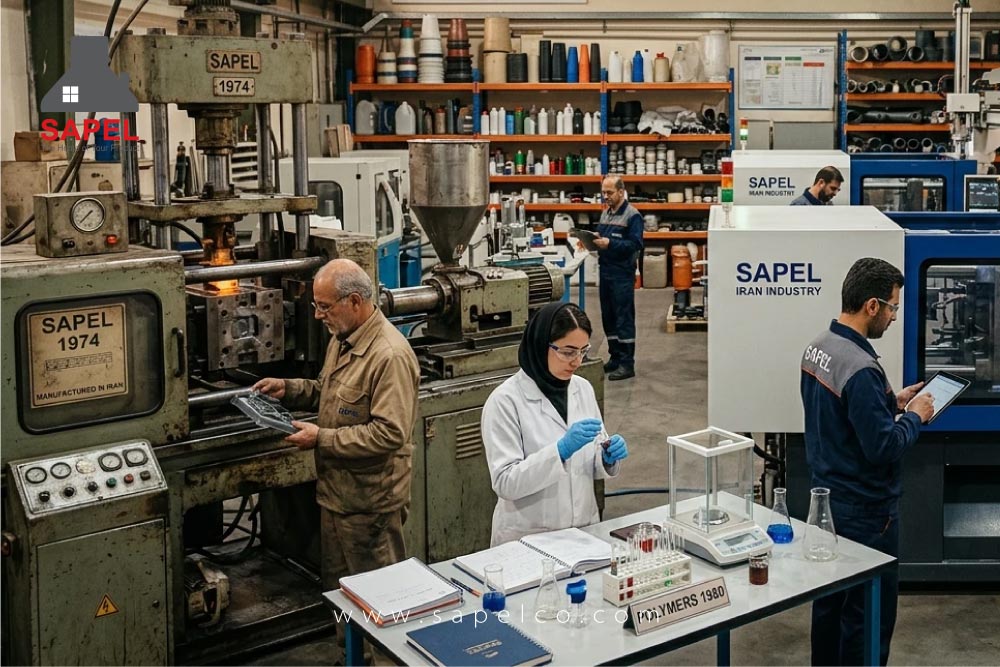
Over the past half-century, Iran’s plastics and polymer industry has gone from being entirely dependent on imports to becoming one of the pillars of the country’s economy and its non-oil exports. According to data from the National Petrochemical Company (NPC) and reports by the national polymer industry association, this journey has gone hand in hand with the growth of petrochemical infrastructure and advances in machinery technology. In this article, as well as reviewing the documented changes in the industry over the past 50 years, we look at how Sapel, one of its long-standing manufacturers, has grown, to see how a business has kept pace with these sweeping changes.
Dependence on Imports and the Birth of Local Manufacturers Amid Constraints
Before the revolution and in the early 1980s, Iran’s domestic capacity for producing polymer materials was very limited, and most of the market’s needs were met through imports. When the war began, currency and import restrictions pushed local industrialists toward domestic production. It was in this period, a turning point for the emergence of the first plastics production hubs in Iran, that Sapel was born, in 1980.
At a time when blow molding and injection molding technology in Iran was still in its infancy, Sapel started out in a small 200 m² workshop with just two blow molding machines, used to make all kinds of plastic jerrycans. The partners’ tireless efforts in those turbulent years laid the foundations of a company that is today one of the industry’s respected names.
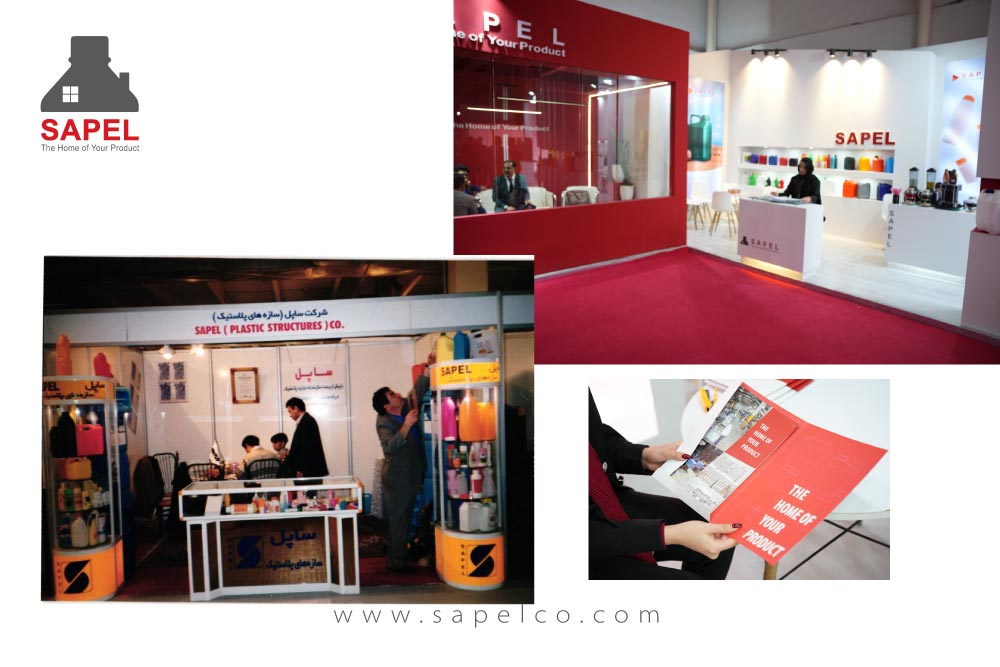
The Petrochemical Boom and a Technological Leap
With the end of the war and the rollout of the National Petrochemical Company’s (NPC) development programs, many petrochemical complexes came on stream across the country. This growth in domestic raw material production in the 1990s allowed downstream plastics manufacturers to expand their capacity.
In step with this industrial leap, Sapel expanded its workshop and its fleet of machines, until in 2000 it moved to the Simin Dasht industrial area in Karaj, into a 2,000 m² factory (with 1,200 m² of factory buildings) equipped with 10 production machines.
The 2000s were a decade of management maturity in Iranian industry. In 2003, with their families growing, Sapel’s partners decided on an “amicable separation” to protect the business. This strategic decision was carried out in 2006: Mr. Naser Amini Alavijeh took over the management and ownership of Sapel, and Mr. Ali Amini founded the Bani No company. It is a successful example of corporate governance in Iran’s mid-sized industries.
The “Island” Strategy in the Face of Major Crises
In recent decades, according to reports by the Iran Chamber of Commerce, the plastics industry has faced many external challenges, including currency fluctuations, sanctions and frequent changes in regulations. Surviving in these conditions requires careful strategies. In an interview with the respected magazine Sanaye Hamgen Plastic, Mr. Naser Amini pointed to the secret of this survival:
“My mentors taught me to imagine that I was alone in the world: you have a small land called Sapel, and running it is your responsibility. Shut out the newspapers and news that only create stress and worry, and focus on your work.”
This is the secret of how great brands endure in times of crisis: focus on your circle of influence and ignore your circle of concern. This independent outlook saved Sapel in the recent crisis, when the petrochemical supply chain was disrupted and raw materials ran short. While the market was caught up in emotional decisions, Sapel focused on sourcing raw materials quickly and transparently through the commodity exchange and kept its B2B customers’ supply chain running without interruption.
Sapel’s Competitive Edge in the Age of Standardization
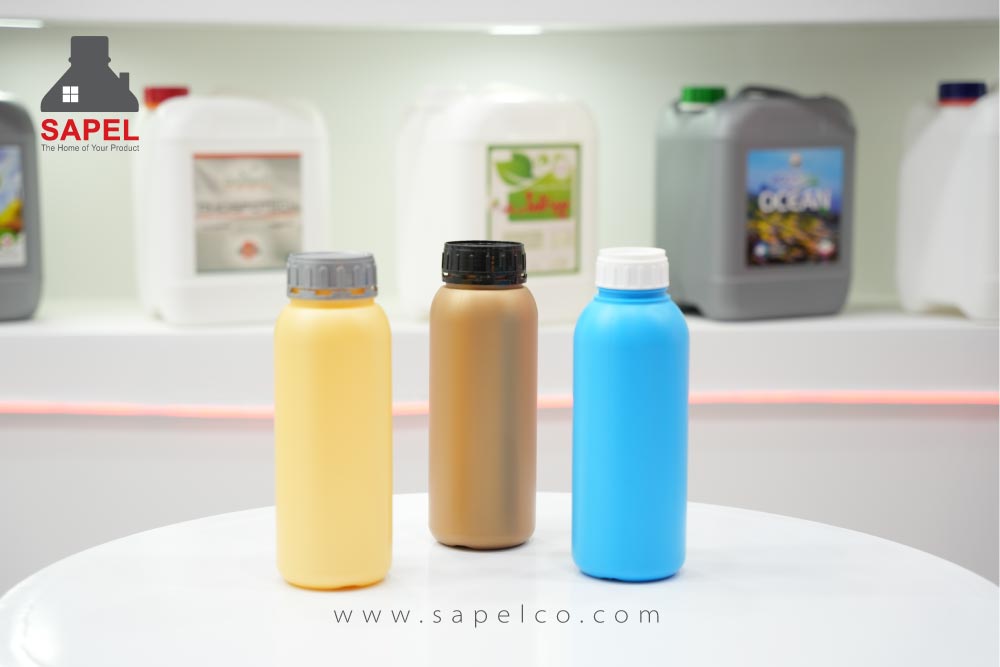
Today, as national and international standards in the packaging industry rise, simply having enough machinery is not enough. Sapel’s competitive edge in today’s market is a combination of half a century of experience and an almost obsessive focus on quality. State-of-the-art machinery and a rigorous quality control (QC) unit have made Sapel a trusted partner for sensitive industries.
Final Word
A look at 50 years of change in Iran’s plastics industry shows that the move from traditional workshops to modern factories takes resilience, a sound understanding of the petrochemical supply chain and continuous quality improvement. Having come through this eventful journey, Sapel is now a symbol of experience and expertise in plastic container production.
We invite B2B customers, manufacturers and polymer industry researchers to see the results of decades of experience and commitment to quality by exploring our wide range of products, including industrial plastic jerrycans and plastic bottles, and to contact our experts for specialist advice.