

Sapel Blog
Why Do Customers Trust Long-Established Brands?
In today’s highly competitive business world, customers’ buying decisions are more closely tied to emotion and psychology than ever before, and “trust” comes first. According to statistics and reports, 88 percent of consumers say that trusting a brand is the main prerequisite for buying from it, and if that trust is there, they will buy from the brand again.
Long-established brands with deep roots have a natural, unmatched advantage here, one that new companies must spend years of effort and investment to achieve. Their credibility and longevity are so powerful in people’s minds that, according to research, American consumers consider long-established brands twice as trustworthy as new challenger brands (58% vs. 27%). This level of established trust is an undeniable competitive advantage that new companies find almost impossible to copy quickly.
The Psychological Roots of Trust: Why Does Longevity Equal Credibility?
When we make a buying decision, before the brain gets round to weighing up a product’s features and specifications logically, it is unconsciously scanning the environment for signs of warmth, good intentions and credibility. This is where the power of a phenomenon called “the familiarity effect” comes into play. When customers face a need or a problem and look for a solution, they are naturally drawn to familiar options.
Very often consumers trust a brand not necessarily because they know all its ingredients or technical details, but simply because they have seen it for years, and that visual and mental familiarity creates trust in itself.
Is a Long History Enough to Build a Brand?
However, for long-established brands, age alone does not guarantee success; what sets a brand apart is understanding the subtle difference between “history” and “heritage“. History is simply a complete record of past names, dates and events, while heritage is a strategic, curated selection of meaningful key moments that reflect the brand’s journey and identity.
Successful heritage brands go beyond their past instead of passively boasting about their founding date or printing “Established in such-and-such year” on their products. They use their “heritage” as a powerful tool and a “proof point” to show customers that their skill, credibility, production quality and core purpose have stayed constant over time and have withstood market ups and downs. This strategic use of heritage connects the brand’s past with today’s and tomorrow’s needs and proves why, after decades, the brand still deserves trust.

The Hidden Profitability of Trust for Long-Established Brands
For long-established brands, customer trust is not just a moral achievement or an advertising asset; it translates directly into profitability and lasting commercial success.
Higher Perceived Value and Willingness to Pay More
One of the most tangible benefits of trust for long-established brands is pricing power. Research shows that 87% of consumers are willing to pay more for products from brands they trust. In fact, customers are willing to pay on average up to 25 percent more to buy from trusted brands (known as the trust premium).
A Shield in Times of Crisis
Every business, however experienced, may slip up, make mistakes or face a crisis over decades of operation. In these situations, the trust built up over many years acts like a powerful shield. Data shows that 55% of customers who trust a brand stay loyal to it even if it makes a mistake or comes under fire, and give their favorite brand a chance to make amends.
A company that can resolve problems and crises over decades with transparency, accountability and responsibility not only prevents customer churn but also turns its customers into powerful brand advocates; according to statistics, 67% of customers who fully trust a brand become its defenders and promoters among their friends and acquaintances.
How to Evolve Without Losing Authenticity
Many long-established brands fall into a dangerous trap called “nostalgia”: they assume they can stay in the market forever simply by relying on past glories and fond memories. But the reality is that standing still and resisting change carries the risk of becoming obsolete. Newer generations of consumers do not show automatic, unquestioning loyalty to a brand just because it is old, and heritage brands must always keep themselves relevant and effective in today’s conditions.
The secret to lasting and evolving successfully is for the brand to stay completely true to its core values and its original quality, while bringing the way it delivers its services, its designs and its communication tools in line with today’s needs, rather than changing its core identity.
On top of that, the way brands communicate and build trust has changed. In past decades, long-established brands relied only on big advertising budgets and the familiarity of their name on store shelves to build trust, but today transparency in performance and production has replaced reliance on advertising slogans alone. Modern customers are no longer satisfied with mere claims of quality; they want to understand the production process and know exactly what they are buying. So heritage brands that can prove their performance with radical transparency, and “educate” customers rather than simply “advertise” to them, will win the battle to keep the trust of new generations.
Sapel: Half a Century of Authenticity Combined with Innovation in the Plastics Industry
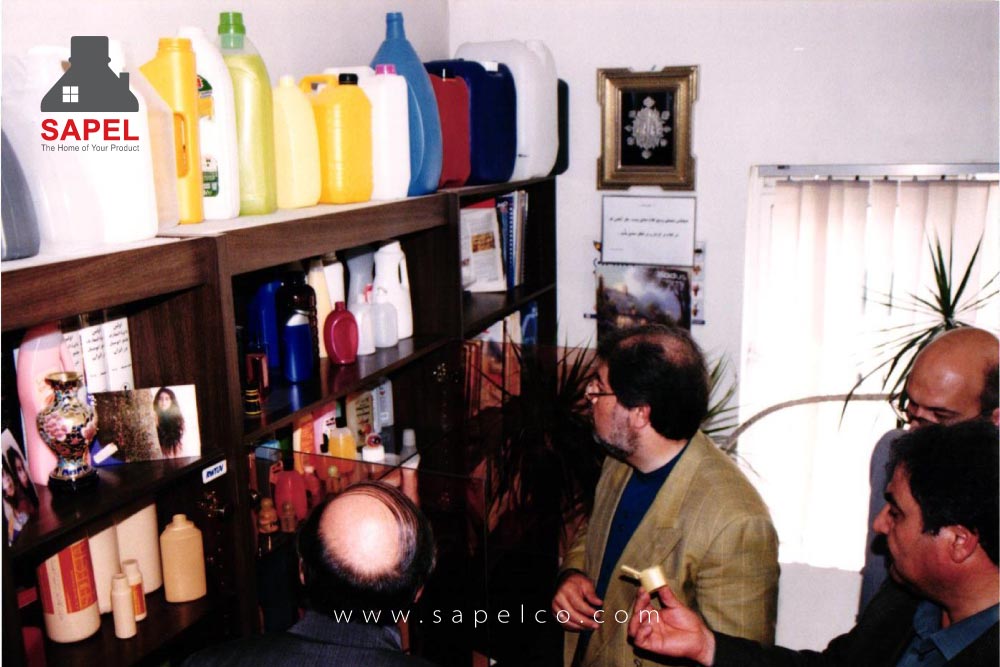
To better understand how a long-established brand can keep its customers’ trust while evolving, it helps to look at a successful local example. Sapel is a clear example of a heritage brand applying these principles properly in the Iranian market, linking the authenticity of its past with today’s innovations. With more than 40 years in the plastics industry (nearly half a century), Sapel enjoys a natural advantage in brand recognition. Building on its long experience and a team of more than 85 skilled professionals, the company has established itself as a trusted manufacturer of all kinds of packaging containers, jerrycans and plastic bottles.
Transparency and Proven Quality
A brand’s heritage is valuable when it serves as proof of quality in the present. By maintaining the highest standards of precision, workmanship and quality in its products, Sapel has earned the trust and support of large, successful customers. This shows that rather than relying on its age alone, Sapel has used its history to guarantee quality and to meet the expectations of major customers.
Evolving with the Times
Perhaps the most important quality that has kept Sapel out of the “nostalgia trap” is its commitment to continuous evolution. Instead of staying in the past, the company has kept updating its products and processes, from producing packaging containers in new designs to using modern, advanced technologies such as wire EDM in making plastic molds. Sapel has also adapted its communication to the needs of modern consumers and uses its website and social media to stay in touch with its customers. By creating the Sapel magazine, the brand has chosen transparency and education over one-way advertising, giving customers and readers specialist, valuable information on topics such as masterbatch and injection-molded polypropylene, so they can make decisions with full knowledge and confidence.